
Why websites are no longer enough, building growth systems that actually scale
 Peter Tu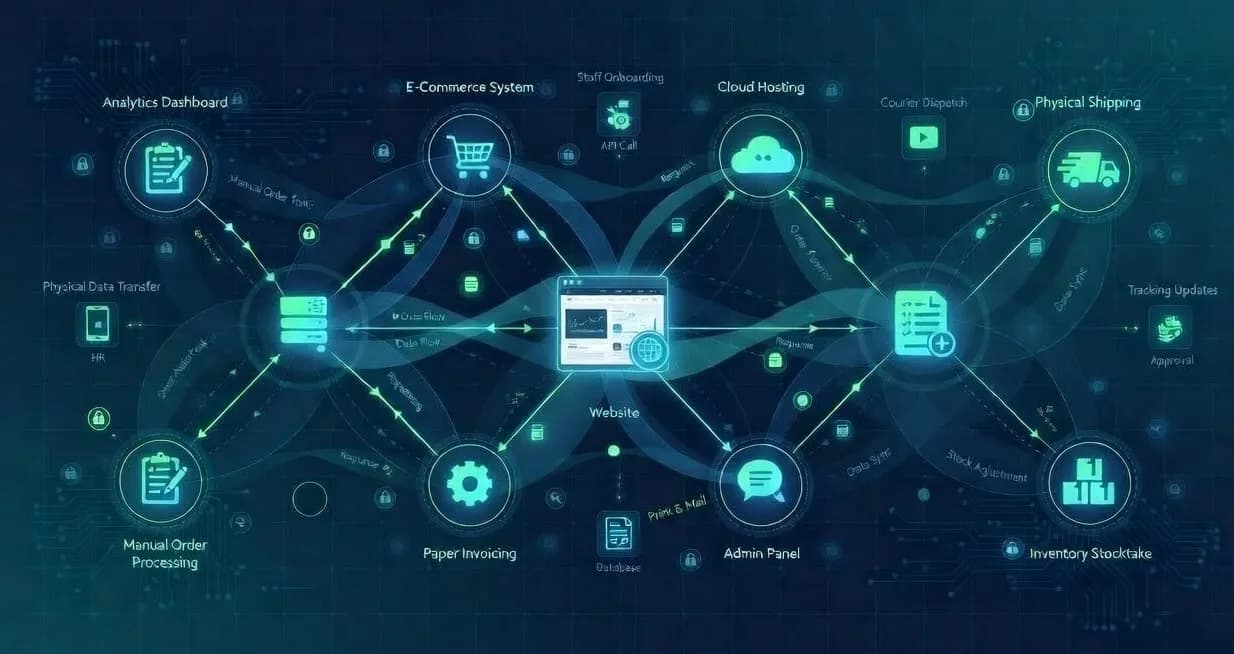
TL;DR Websites alone do not drive growth anymore. Businesses that win are building integrated systems where websites, CRM, Email functions, SEO, paid media, CRO, analytics, automated workflows and customer journeys are designed together from day one. AI is accelerating this shift, making connected systems the real competitive advantage.
The problem with how most websites are built
Most businesses still follow the same outdated process. They build a website first, then layer everything else on top.- Analytics get connected (we've seen many clients with no tracking)
- Existing CRM's connected
- SEO gets added later
- Email platforms, and plug-ins get plugged in over time.
This creates a fragmented system. Each tool operates in isolation. Data does not flow properly. The user experience becomes inconsistent. Over time, businesses end up with a stack of tools trying to solve one problem. This is not a growth system. It is a patchwork.
Why this matters commercially
When your systems are disconnected, performance suffers across every channel.- traffic does not convert efficiently
- data is inconsistent or incomplete
- automation breaks or becomes manual
- marketing decisions are made without full visibility
The result is lower conversion rates, higher acquisition costs, and slower growth. This is why businesses often increase spend but do not see proportional returns. The issue is not traffic. It is the system.
The shift from websites to growth systems
The most effective businesses are no longer building websites. They are building systems. The website is just one component inside that system. A modern growth system is designed from the ground up to:- attract traffic
- convert users
- nurture leads
- build customer relationships
- improve performance over time
Everything is connected from day one.
What a modern growth system actually includes
Instead of building a website and adding tools later, the system is designed holistically. A typical growth system includes:- SEO optimised site architecture
- conversion rate optimisation built into page design
- paid traffic integration through Google Ads
- lead capture flows and qualification logic
- email nurture sequences and lifecycle flows
- analytics in-built
- testing tools integrated into the website
- customer database and segmentation
- automation across the entire funnel
- customer portals or onboarding systems
Every part is designed to work together. This creates a system, not a stack.
Why building from scratch is different
Most agencies focus on connecting tools. CRMs, plugins, email platforms, integrations. But connecting tools is not the same as building a system.When you build from scratch:
- every component is tailored to the business model
- data flows seamlessly across the system
- user experience is consistent end to end
- automation is built into the core, not added later
This creates synergy. Instead of multiple tools trying to work together, you have one system designed to achieve a single outcome.
Why AI is making this even more important
AI is not replacing the need for strong systems. It is making the gap between good and bad systems wider. AI relies on structured, connected data. If your business runs on disconnected tools:- AI cannot access complete data
- automation becomes limited
- insights are fragmented
If your system is integrated:
- AI can operate across the full customer journey
- decisions improve
- processes become faster and more consistent
This is where the real competitive advantage is emerging. Traditional setups like WordPress sites with SEO plugins or bolted-on CRM integrations are no longer enough. The advantage is shifting to businesses that build intelligent, connected systems from day one — the kind of work covered in our AI and automation service.
The customer journey is the system
Most businesses focus only on getting traffic. But growth happens across the entire journey. From first interaction to conversion and beyond. A properly designed system considers:- how users discover the business
- how they interact with the website
- how leads are captured and qualified
- how the business responds
- how relationships are nurtured
- how repeat business is generated
This is where real growth happens. Not at the website level, but across the entire journey.
The problem with adding tools over time
Many businesses end up with:- multiple subscriptions
- duplicated functionality
- disconnected data
- inconsistent reporting
This creates operational inefficiency and limits scalability. Adding more tools does not fix the problem. It often makes it worse. The issue is not the tools themselves. It is how they are structured.
Why systems outperform websites
A website can generate traffic. A system generates growth. The difference is integration.Systems:
- convert traffic more effectively
- improve over time through data
- scale without increasing complexity
- support both marketing and operations
This is what allows businesses to move from lead generation to predictable growth.
How this ties into a broader growth strategy
This is not just a website decision. It is a business growth strategy decision. When systems are designed properly:- paid acquisition becomes more efficient
- organic channels compound faster
- conversion rates increase
- customer lifetime value improves
This is where a true integrated digital growth strategy becomes critical.
Final perspective
Websites are no longer the foundation of growth. Systems are. AI is accelerating this shift, not replacing it. Businesses that continue to build websites and layer tools later will struggle with inefficiency and rising costs. Businesses that build integrated systems from the start will:- grow faster
- convert better
- scale more efficiently
The question is no longer “Do you need a better website?” It is “Do you have a system that is designed to grow your business?”
FAQs
Yes, but it is only one part of the system. Growth comes from how the website connects with SEO, paid media, CRO and automation. A well-built website provides the foundation for every other channel to perform — site speed, conversion paths, structured data, and tracking all need to work together. When the website itself is holding back performance, rebuilding it as part of the system is often the fastest path to unlocking growth.
A growth system is an integrated setup where traffic generation, conversion, automation and customer journeys are designed to work together.
Most are built in isolation and rely on disconnected tools. This limits performance, data visibility and scalability.
AI works best with structured, connected data. Businesses with integrated systems can leverage AI more effectively for automation and optimisation.
If your goal is growth, you should focus on building a system where the website is one component, not the entire solution. If your current website is the bottleneck, we offer an SEO website build service that delivers a fast, conversion-ready site in under a week, designed as part of your broader growth system from day one.

Digital Growth Marketer / Founder
12+ years of experience managing over $100 million in ad spend. I started by building my own ecommerce business, which shaped my approach to efficient growth, then went on to help established brands scale through performance channels. My focus is data-led strategy and honest advice about what will actually work for each brand. Outside of work, I stay active across a bunch of sports, head to the mountains when I need perspective, and occasionally let the ocean reset everything. I'm enjoying this very temporary existence and trying to stay a curious student of this universe.